Check Out
Select the files or folders you need. Depot Desk opens them for edit and secures any required locks on the server.
A friendlier Git client for creative teams
Depot Desk is a heavily opinionated Git client for teams working with large, hard-to-merge files. It turns technical Git concepts into clear actions: Check Out, Get Latest and Submit.
Familiar to teams coming from Perforce, Plastic SCM, Vault, Alienbrain and other checkout-style source control systems.
The familiar part stays familiar
Your team should not need a Git vocabulary lesson before changing an asset. Depot Desk guides the whole job and keeps the technical machinery out of the way.
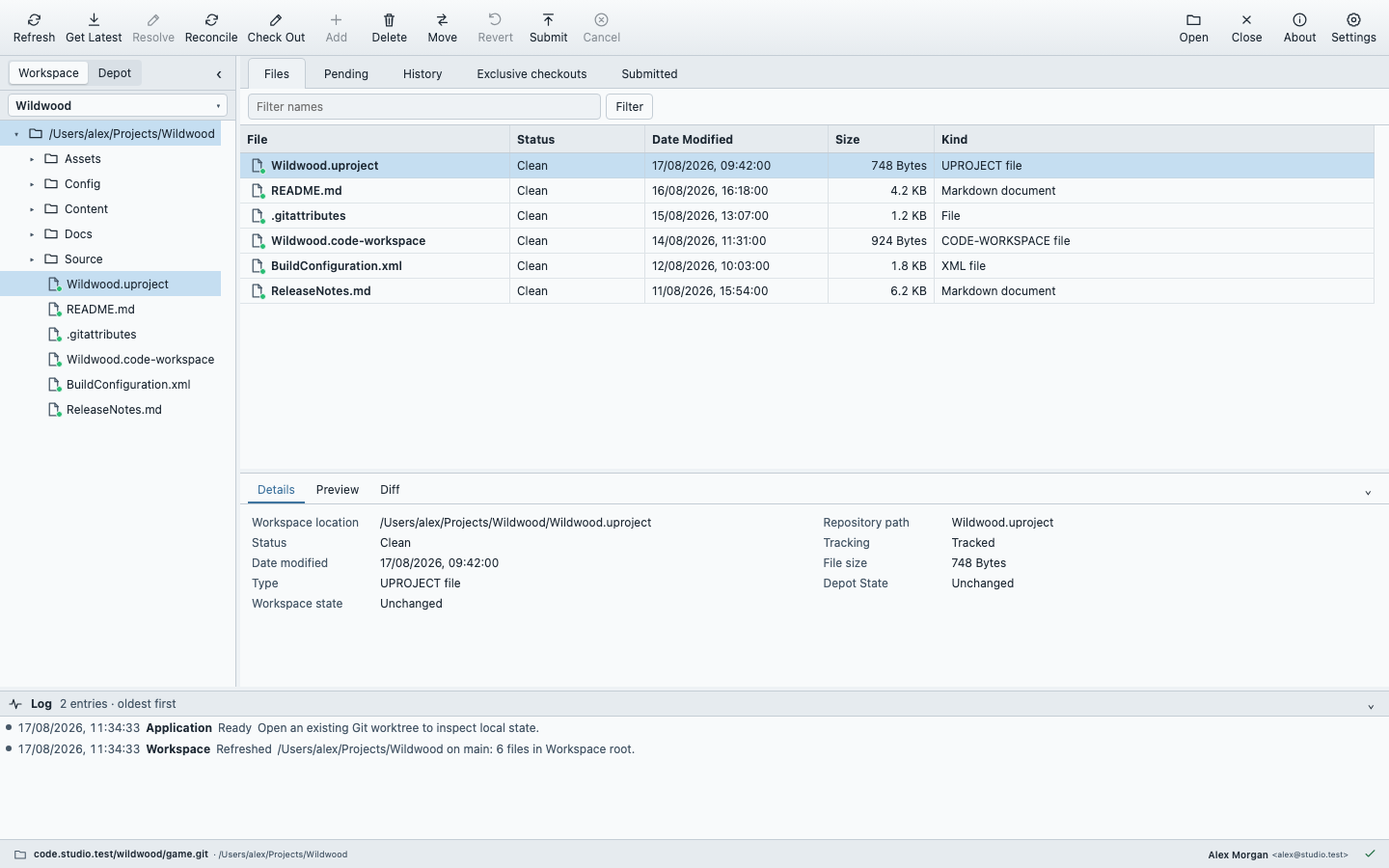
Select the files or folders you need. Depot Desk opens them for edit and secures any required locks on the server.
Work in Unreal, Unity, Blender, Adobe apps or any Git-aware application. The Workspace shows which files are open for edit or have been modified.
Group local changes into multiple sets, each with its own name and description. Submit one set or all changes together, sending them to the server and releasing their locks in a single action.
Locking without the ceremony
Depot Desk makes checkout the fast path. Select what you need and carry on—locking happens inside the workflow, with ownership visible in the workspace.
Use the lock service your Git host already supports, without a separate source-control system.
Check out a single asset or prepare a larger task without repeating the same action file by file.
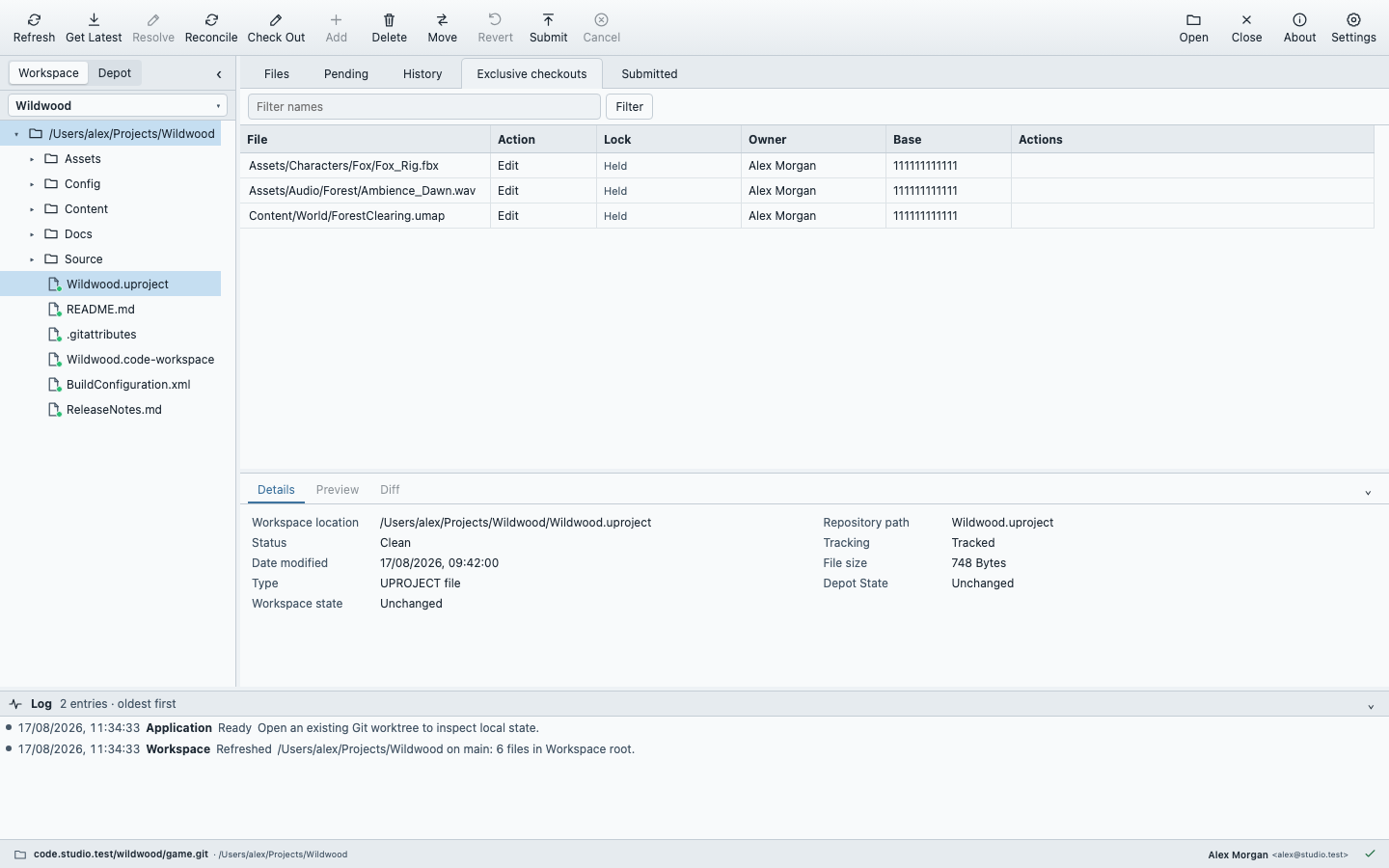
See your held checkouts and spot files another teammate is already working on.
Bulk and recursive checkouts are optimised for large folder trees, keeping project-scale work fast.
Current alpha interface
Browse the Workspace and Depot, inspect pending work, review history and manage exclusive checkouts from one desktop client.
Opinionated by design
Depot Desk does not replace or fork Git. It gives your team a deliberately simpler way to use it.
Private alpha
Depot Desk's client experience is in private alpha; its source-control foundation is not. It uses Git and Git LFS for repositories, history and large files rather than introducing a new source-control system.
Tell us a little about your team. We will reply personally if the current alpha is a useful fit.
The short version
Yes. It works with ordinary Git repositories and Git LFS. Depot Desk changes the everyday workflow and language, not the repository format underneath.
Teams that prefer checkout-and-submit source control, especially games and creative teams working with large binary assets that cannot be merged cleanly.
No. Repositories can use locks only for the file types that need them. Text and code can continue to use normal Git behaviour.
The Depot Desk client is in private alpha, and early testers will directly influence what is refined next. The source control underneath is established Git and Git LFS—not a new repository format or service.